Thank you so much for your generous donation!
You're creating real change — your support truly matters!
Stay connected with the project you backed and with Nature Invest -- be part of the movement for a better planet.


Created by, Alessandro Miranda
Organization Name: RESGATANDO A CULTURA TERENA - DANÇA TRADICIONAL INDÍGENA
Strategic Partner: Project Not Assign
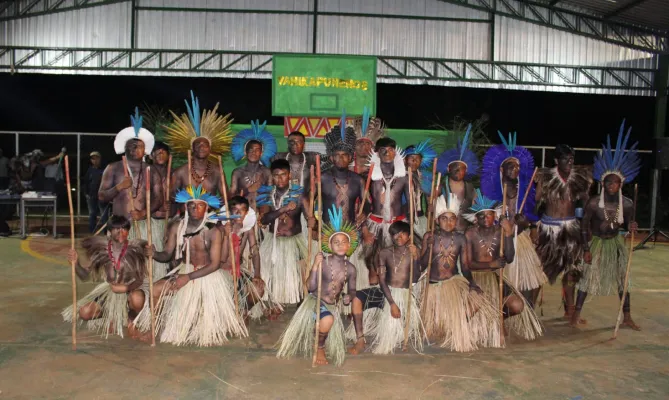
The “Rescuing Terena Culture” project is an initiative aimed at strengthening, promoting, and preserving the culture of the Terena people in the Nioaque Indigenous Territory. Through traditional indigenous dance, the project brings together children, youth, and adults, promoting the transmission of ancestral knowledge across generations and encouraging community participation in cultural events.In addition to dance rehearsals and performances, the project emphasizes body painting, indigenous graphic art, traditional songs, musical instruments, and the wearing of traditional attire—elements that represent the identity, history, and spirituality of the Terena people. These practices strengthen a sense of belonging, respect for traditions, and pride in Indigenous culture.The project seeks to revive customs and knowledge that are part of our history—that of the Terena people—helping children, youth, and adults keep their traditions alive and pass this cultural heritage on to future generations. In this way, it promotes the preservation of cultural identity, strengthens community bonds, and encourages the recognition and appreciation of Terena culture both within and outside the community.
The main challenge of the “Rescuing Terena Culture” project is to preserve and strengthen the culture of the Terena people in the Nioaque Indigenous Territory. The goal is not only to encourage the practice of traditional indigenous dance but also to revive the Terena language, body painting, indigenous graphic art, musical instruments, traditional clothing, and other customs that are part of our community’s history.
Today, one of the greatest challenges is that fewer and fewer people speak the Terena language, especially among children and young people. Similarly, many traditions are no longer practiced as frequently as they once were, which could lead to this knowledge being forgotten over time.
For this reason, the project aims to engage children, youth, adults, and elders in activities that celebrate Terena culture. Dance will be the primary means of bringing the community together, but the project will also focus on the language, body painting, graphic art, and the wearing of traditional attire, thereby strengthening cultural identity and encouraging the transmission of this knowledge to future generations.
More than just teaching people to dance, the project aims to keep Terena culture alive, strengthening pride in belonging to the Terena people and ensuring that their history, language, and traditions continue to be preserved and passed down from generation to generation.
The “Rescuing Terena Culture” project is coordinated by Indigenous teachers from the Nioaque Indigenous Territory and brings together students from the communities, children, youth, adults, elders, and other residents who wish to contribute to the preservation and strengthening of Terena culture. The initiative aims to bring different generations together, promoting the exchange of knowledge and ensuring that traditional knowledge remains alive.
The project’s main activity will be holding rehearsals and performances of traditional Indigenous dance. However, the project goes far beyond dance. The gatherings will serve as spaces for socializing, learning, and strengthening cultural identity, where children and youth will have direct contact with the teachings of the elders and those who preserve the knowledge of the Terena people.
The group includes people fluent in the Terena language, who assist in teaching the language during rehearsals and other activities. Commands, instructions, songs, and various conversations are conducted in the Terena language, allowing children and youth to learn naturally and contributing to the preservation of a language that is currently spoken by an ever-decreasing number of people.
In addition to rehearsals, the group will hold cultural performances in the Nioaque Indigenous Territory, at schools, community events, in the city of Nioaque, and in other municipalities. It will also represent the community at important indigenous gatherings and movements, such as the Terena People’s Assembly, Indigenous Peoples’ Week, and other cultural events, bringing Terena culture to diverse audiences and strengthening the recognition and appreciation of indigenous traditions.
To ensure these activities continue on an ongoing basis, the project needs support to sustain rehearsals, expand the participation of children, youth, and the community, and enable the group to travel to performances and cultural events. This support will help strengthen the preservation of the Terena language, value the knowledge passed down by the elders, and ensure that future generations keep the history, identity, and culture of the Terena people alive.
Thus, the “Rescuing Terena Culture” project seeks to preserve not only traditional dance but also the language, customs, knowledge, and identity of the Terena people, strengthening pride in belonging to the community and ensuring that their culture remains alive and is passed down from generation to generation.
The “Rescuing Terena Culture” project will carry out activities throughout the year, bringing together children, youth, adults, and elders from the Nioaque Indigenous Territory. There will be traditional Indigenous dance rehearsals, gatherings for teaching and practicing the Terena language, opportunities for knowledge exchange between elders and younger generations, as well as the organization and preparation of the group’s cultural activities. Each gathering will be an opportunity to strengthen cultural identity, encourage community participation, and keep the traditions of our people alive.
The donation funds will be used to strengthen the project’s activities and ensure better conditions for its operation. The support will be allocated to the creation and maintenance of traditional costumes, the purchase of body-painting supplies, the purchase and maintenance of musical instruments, transportation for participants when travel is required for performances and events, meals during trips and gatherings, as well as the purchase of support materials for rehearsals and other project activities.
With this support, it will be possible to expand the participation of children, youth, and the community, strengthen the teaching of the Terena language, and ensure the continuity of cultural preservation efforts. In this way, the project will help keep the history, knowledge, and traditions of the Terena people alive in our territory.
Aldeia Agua Branca - Terra Indígena Nioaque